Solution


Robotic Grinding and Polishing

Robotic grinding and polishing are commonly used in manufacturing for industrial applications. Robots or cobots are programmed to grind and polish on different materials and surfaces. A force measurement system needs to be implemented in order to monitor and control the amount of force exerted on to the grinding workpiece.
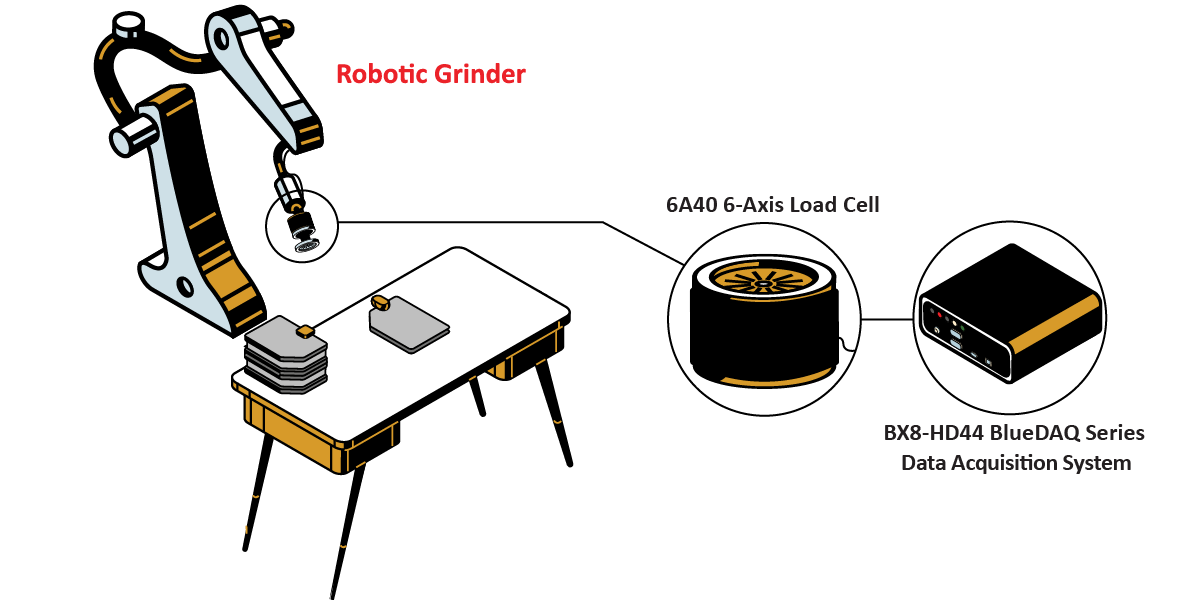
RoboticGrindingGraphic

Summary

  • Customer Need / Challenge

    Robotic grinding and polishing are commonly used in manufacturing for industrial applications. Robots or cobots are programmed to grind and polish on different materials and surfaces. A force measurement system needs to be implemented in order to monitor and control the amount of force exerted on to the grinding workpiece.

  • Interface Solution

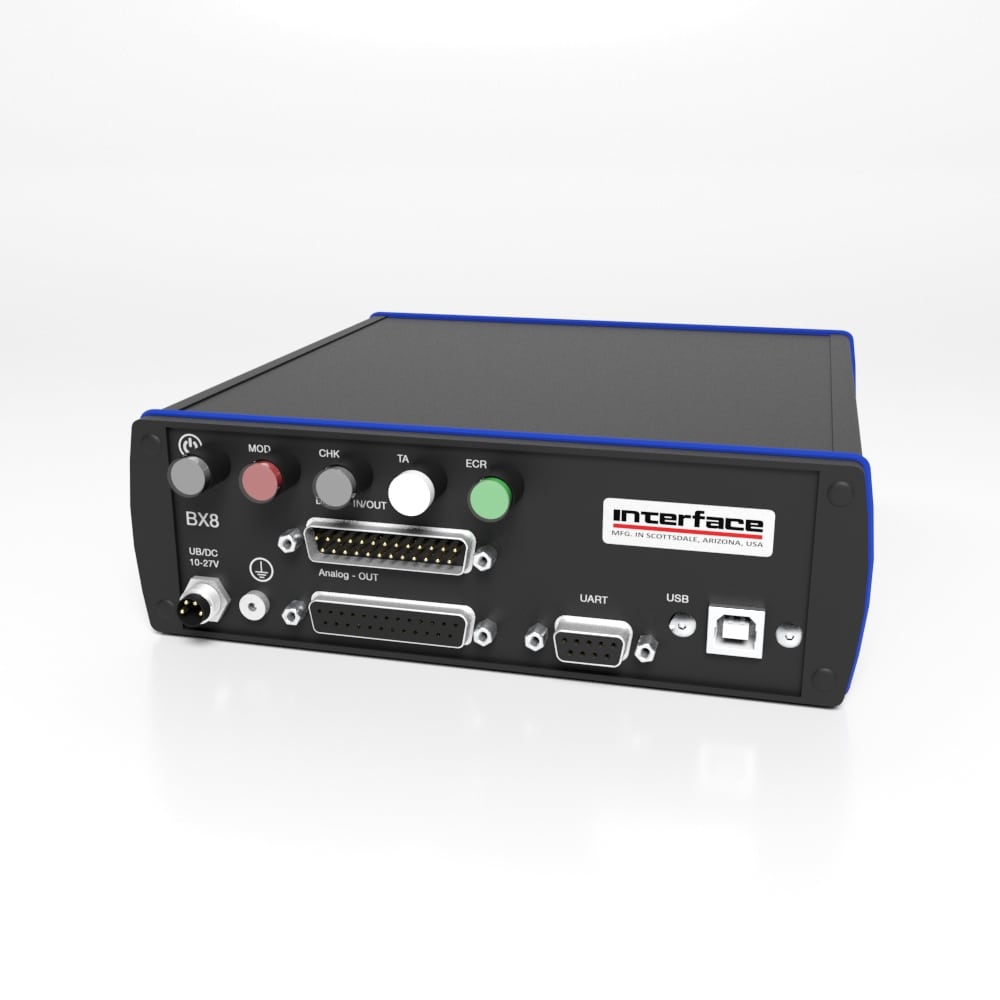
    Interface’s Model 6A40A 6-Axis Load Cell can be installed between the flange and the grinding tool. When connected to the BX8-HD44 Data Acquisition, the customer can receive force and torque measurements when connected to their control system using BlueDAQ sofware.

  • Results

    The 6A40-6 Axis Load Cell was able to measure all forces and torques (Fx, Fʏ, Fz, Mx, Mʏ, Mz) and the BXB-HD44 Data Acquisition was able to log, display, and graph these measurements while sending scaled analog output signals for these axes to the robot’s control system.

Materials


  • 6A40 6-Axis Load Cell
  • BX8-HD44 BlueDAQ Series Data Acquisition System with included BlueDAQ software
  • Customer’s robotic arm and control system

How it Works


  1. The 6A40 6-Axis Load Cell is positioned between the flange and the grinder.
  2. 6A40 6-Axis Load Cell is linked to the BX8-HD44 BlueDAQ Series Data Acquisition System, which gathers force and torque measurement data.
  3. The customer connects the BX8’s analog outputs to their control system. This enables the customer to monitor, log, display, and graph these measurements. The results are sent to the customer’s control system via analog or digital output.

Download PDF